
Worl Hepatitis Day: Where is Innovation Focused Today?
World Hepatitis Day is a reminder that viral hepatitis is not one disease and that innovation needs differ substantially across hepatitis types.
Despite decades of progress, hepatitis B, C and D continue to affect over 300 million people globally and remain major drivers of cirrhosis, liver cancer and preventable mortality. At the same time, the innovation landscape shows an important contrast: some hepatitis types already have highly effective prevention or treatment tools, while others still face major scientific and access gaps.
Over the past year, several developments stood out:
HBV: moving closer to functional cure
Chronic hepatitis B remains one of the largest areas of unmet need in viral hepatitis. Current antiviral therapy can suppress HBV replication, but most patients require long-term or lifelong treatment. This is why functional cure remains such an important objective.
A major milestone came from GSK’s Phase III B-Well 1 and B-Well 2 studies of bepirovirsen, an investigational antisense oligonucleotide. In pooled data, bepirovirsen achieved a 19% functional cure response, compared with 0% in the placebo / standard-of-care group. In patients with lower baseline HBsAg levels, the response increased to 26%. The therapy is now under regulatory review in multiple major markets, including FDA Priority Review in the US and EMA review in Europe.
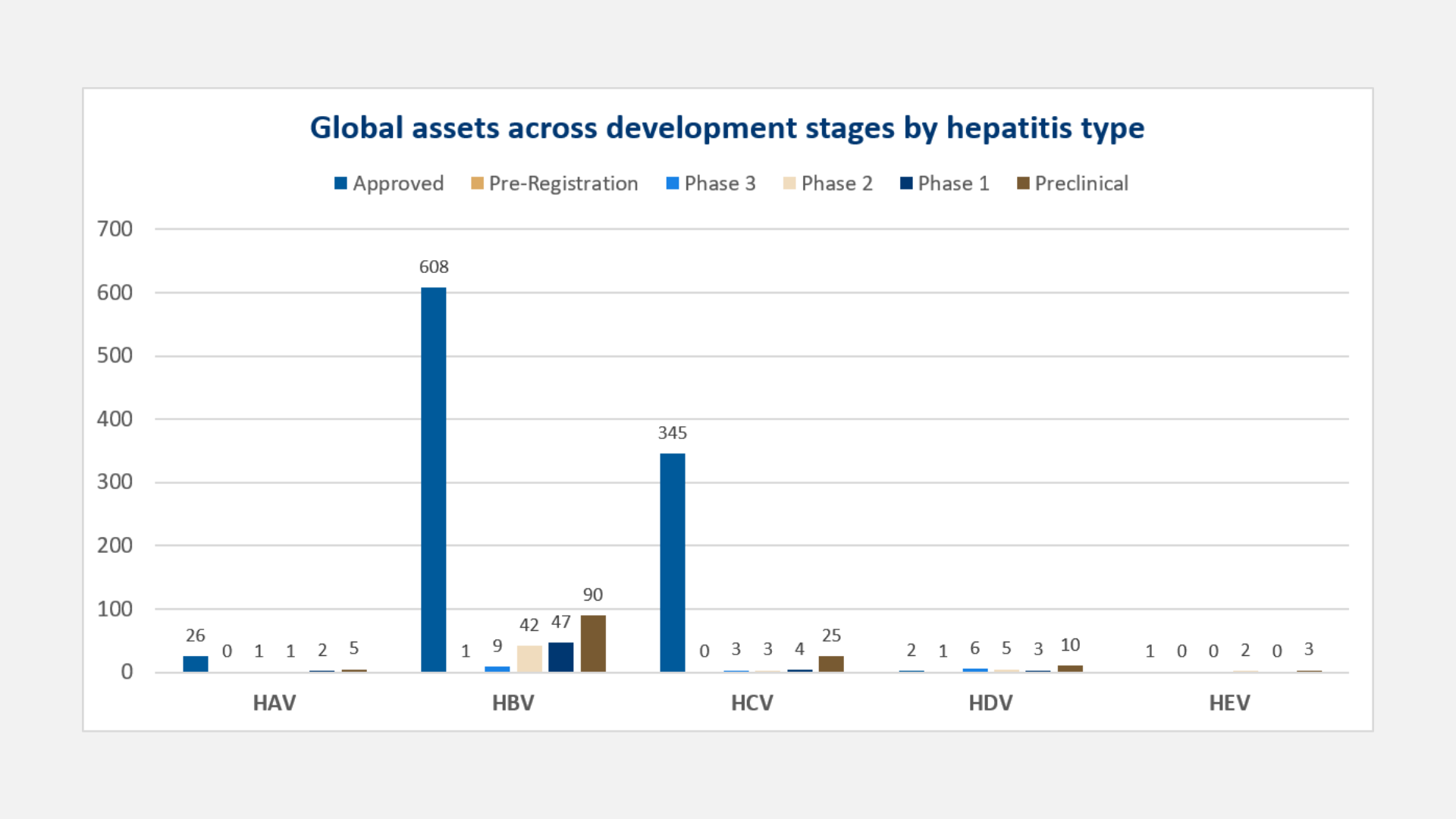
Our global pipeline assessment shows that HBV remains the most active area of hepatitis asset development, both in absolute asset numbers and in diversity of approaches. Candidates span RNA-based therapies, therapeutic vaccines, antibodies, immune modulators and other novel mechanisms.
This reflects a key point: HBV already has an effective vaccine, but chronic HBV still lacks a broadly applicable finite cure strategy.
HDV: treatment access expands
Hepatitis D has historically had very limited treatment options, despite being considered the most severe form of viral hepatitis. In May 2026, the FDA granted accelerated approval to Hepcludex / bulevirtide-gmod, making it the first FDA-approved treatment for chronic HDV infection in eligible adults. This follows earlier European authorization and represents an important expansion of treatment access.
This also comes at a time of increased attention to HDV: in 2025, IARC classified hepatitis D virus as carcinogenic to humans, reinforcing the importance of diagnosis, treatment and prevention in people living with HBV.
HCV: cure exists, but prevention remains the gap
HCV is one of the major success stories of antiviral innovation. Direct-acting antivirals can cure more than 95% of treated patients, and this has reshaped the treatment landscape. However, there is still no preventive HCV vaccine, which remains an important gap for elimination efforts.
One area to watch is the development of controlled human infection models (CHIMs) for HCV vaccine research. The Oxford Hepatitis C Inoculum Trial is preparing standardized viral inocula for future challenge studies, while a CIHR-funded Canadian team is planning a controlled human infection study with healthy volunteers in late 2026. These models could help accelerate vaccine testing and improve our understanding of protective immunity.
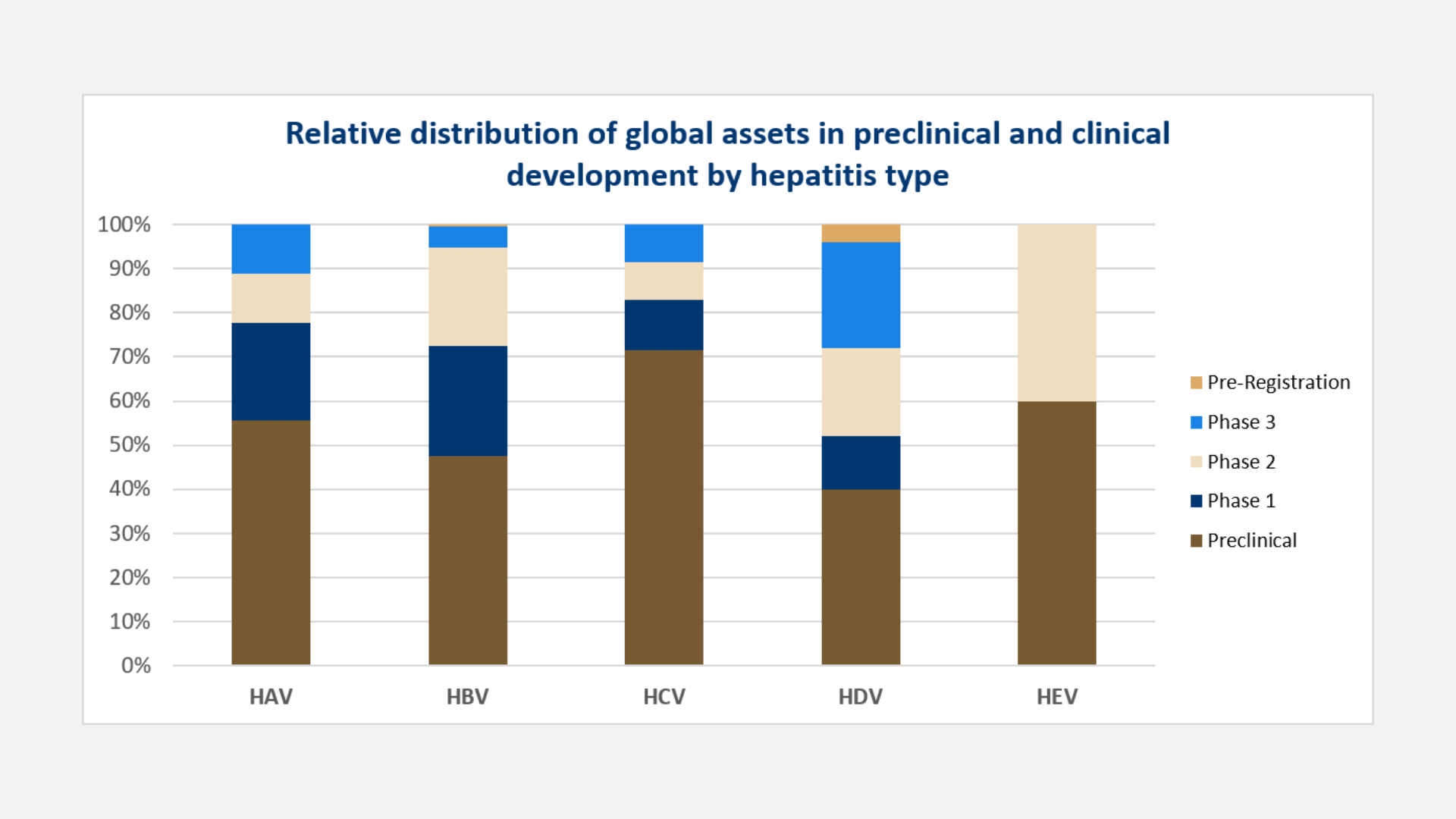
Taken together, the innovation landscape tells a nuanced story:
- HBV dominates active development because functional cure remains unresolved.
- HCV has a mature treatment landscape, but still lacks prevention.
- HDV is smaller in pipeline size, but recent regulatory progress and carcinogenicity recognition are increasing attention.
- HAV and HEV remain comparatively less active areas of therapeutic development.
On World Hepatitis Day, the message is clear: hepatitis elimination will not depend on one innovation pathway alone. It will require prevention, diagnosis, treatment access and continued R&D where today’s tools are still not enough.
Sources and Links:
- B-Well Study Group. Phase 3 Results of Bepirovirsen Treatment for Chronic Hepatitis B Virus Infection. N Engl J Med. 2026 Jun 25;394(24):2395-2406. doi: 10.1056/NEJMoa2515131. Epub 2026 May 28. PMID: 42206582.
- https://us.gsk.com/en-us/media/press-releases/bepirovirsen-accepted-for-priority-review-and-granted-breakthrough-therapy-designation-by-the-us-fda
- https://www.gsk.com/en-gb/media/press-releases/bepirovirsen-accepted-for-review-by-the-european-medicines-agency-as-a-potential-first-in-class-treatment-for-chronic-hepatitis-b
- https://www.who.int/news/item/28-07-2025-who-urges-action-on-hepatitis-announcing-hepatitis-d-as-carcinogenic
- https://teams.public.onecdn.static.microsoft/evergreen-assets/safelinks/2/atp-safelinks.html
- https://teams.public.onecdn.static.microsoft/evergreen-assets/safelinks/2/atp-safelinks.html
- https://www.who.int/news-room/events/detail/2026/07/28/default-calendar/world-hepatitis-day-2026-commemoration
- https://www.fda.gov/news-events/press-announcements/fda-approves-first-treatment-chronic-hepatitis-delta-virus-hdv-infection
- https://www.ema.europa.eu/en/medicines/human/EPAR/hepcludex